
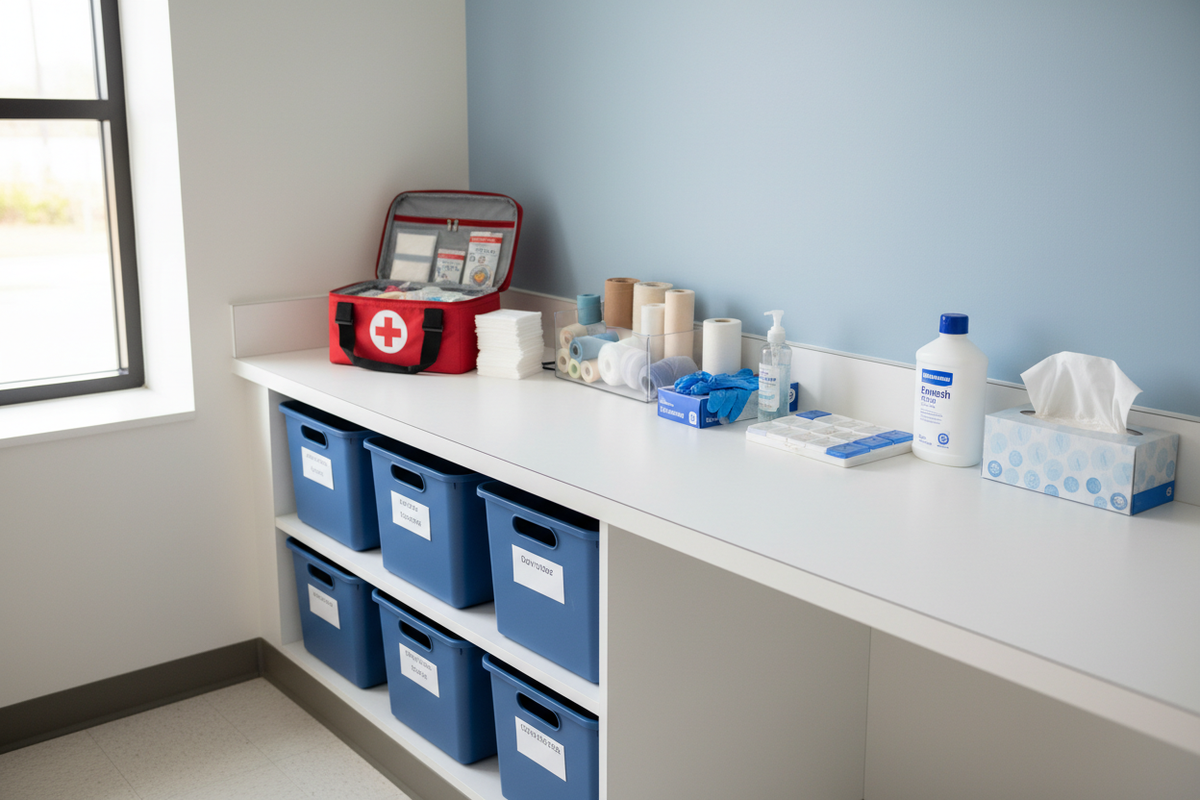
Nurse's Office Supply Checklist for Schools
A well-stocked school nurse's office helps health staff respond efficiently to everyday student needs, from minor cuts and scrapes to routine health visits and hygiene concerns. But maintaining a complete school health office requires more than a basic first aid kit.
A complete nurse's office supply checklist can help school nurses, administrators, office managers, and purchasing teams keep essential first aid, wound care, hygiene, PPE, eyewash, medication-storage, and organizational supplies available when they are needed.
Use this checklist as a practical starting point for stocking your school's health office, then adjust quantities and products according to student enrollment, health services, school policies, applicable requirements, and actual usage.
Why Schools Need a Nurse's Office Supply Checklist
School health offices serve a wide range of everyday needs. Staff may need to address minor injuries, provide routine student care, manage hygiene concerns, maintain first aid supplies, organize medications, and respond to unexpected situations.
Without a standardized inventory system, schools can easily run out of frequently used supplies or discover that an important product needs to be replaced.
A school nurse office checklist can help staff:
- Maintain adequate first aid inventory
- Organize health office supplies
- Track frequently used consumables
- Establish reorder points
- Prepare for the school year
- Monitor applicable expiration dates
- Standardize purchasing
- Reduce last-minute supply shortages
BSC Supply offers a selection of medical supplies and education supplies that can help schools build and maintain their health-office inventory.
1. First Aid Kits and Wound-Care Supplies
First aid supplies are the foundation of most school nurse offices. Keep commonly used wound-care products organized and easy for authorized staff to access.
First aid checklist:
- ☐ First aid kits
- ☐ Adhesive bandages in multiple sizes
- ☐ Sterile gauze pads
- ☐ Medical tape
- ☐ Antiseptic wipes
- ☐ Burn-care supplies
- ☐ Cold packs
- ☐ Disposable gloves
- ☐ Scissors and forceps
- ☐ Absorbent dressings
BSC Supply offers the 25 Person First Aid Kit, ANSI A, Metal Case, providing a ready-to-use option for minor-injury supplies.
Schools looking for a larger organized system can also consider the First Aid Only Class A SmartCompliance First Aid Cabinet.
2. Sterile Gauze and Dressing Supplies
Gauze is a frequently used first aid consumable and should be included in regular inventory checks. Maintain appropriate sizes and quantities based on the school's needs and usage history.
Gauze and dressing checklist:
- ☐ Sterile gauze pads
- ☐ Absorbent dressings
- ☐ Adhesive dressings
- ☐ Medical tape
- ☐ Gauze refills
BSC Supply carries SmartCompliance 3" x 3" Sterile Gauze Pad Refills for compatible first aid cabinets.
3. Eyewash and Eye-Care Supplies
Schools should evaluate their need for eyewash and eye-care supplies based on their facilities, activities, health and safety procedures, and applicable requirements.
Eye-care checklist:
- ☐ Eyewash supplies
- ☐ Sterile eye pads
- ☐ Appropriate eye-protection equipment
- ☐ Clearly identified storage
BSC Supply offers a SmartCompliance Eyewash Refill with Eye Pads for compatible first aid cabinets.
Always follow your school's established emergency and health procedures for eye injuries rather than relying on a supply checklist alone.
4. Hygiene and Hand-Hygiene Supplies
Hygiene products are essential for a functional school health office. Staff may need access to hand-hygiene products throughout the day, particularly before and after routine student care.
Hygiene checklist:
- ☐ Hand sanitizer
- ☐ Hand soap
- ☐ Disposable gloves
- ☐ Facial tissues
- ☐ Paper towels
- ☐ Appropriate cleaning products
- ☐ Disposable bags or waste containers
BSC Supply carries Dynarex Hand Sanitizer Sachets, which can provide convenient individual-use hand sanitizer for appropriate school settings.
5. Personal Protective Equipment
PPE should be stocked according to the school's health services, procedures, activities, and infection-control practices.
PPE checklist:
- ☐ Nitrile or other appropriate examination gloves
- ☐ Protective masks where appropriate
- ☐ Protective eyewear where appropriate
- ☐ Disposable protective barriers or gowns where appropriate
- ☐ Hand-hygiene supplies
Keep PPE organized and include frequently used products in routine inventory checks.
6. Antiseptic and Minor-Injury Treatment Supplies
Schools should maintain appropriate supplies for routine minor-injury care and replenish frequently used products based on actual usage.
Minor-injury checklist:
- ☐ Alcohol wipes
- ☐ Antiseptic products
- ☐ Burn-care products
- ☐ Appropriate antibiotic ointment packets
- ☐ Sting-relief products where appropriate
The Antiseptic Unit with Alcohol Wipes, Burn Cream, and Triple Antibiotic Ointments provides individually packaged products for common first aid applications.
BSC Supply also offers Mitigator Sting Relief Packets.
7. Medication Storage and Organization
Medication management requires careful organization and should always follow the school's written procedures and applicable federal, state, and local requirements.
Medication-storage checklist:
- ☐ Secure medication storage
- ☐ Clearly labeled storage areas
- ☐ Medication organizers
- ☐ Documentation materials
- ☐ Appropriate emergency medication storage
- ☐ Restricted-access storage where required
BSC Supply offers a SmartCompliance Complete Medication Station, which provides organized medication storage with a secure locking system.
Important: Product selection does not replace professional, medical, regulatory, or school-policy guidance. Schools should verify that any medication-storage solution meets their specific requirements.
8. Student Comfort and Routine-Care Supplies
Not every nurse's office supply belongs in a first aid cabinet. Schools may also need everyday products for routine student visits and general health-office operations.
Routine-care checklist:
- ☐ Facial tissues
- ☐ Disposable protective materials
- ☐ Disposable bags
- ☐ Water cups or appropriate hydration supplies
- ☐ Thermometers and accessories where appropriate
- ☐ Storage containers
- ☐ Privacy supplies where appropriate
9. Documentation and Office Supplies
A school nurse's office is also an administrative workspace. Keeping basic office supplies available can help staff manage forms, records, inventory, and daily operations.
Office-supply checklist:
- ☐ Pens and markers
- ☐ Clipboards
- ☐ File folders
- ☐ Binders
- ☐ Labels
- ☐ Printer paper
- ☐ Secure document-storage supplies
- ☐ Inventory checklists
10. Emergency Preparedness Supplies
Schools should maintain emergency supplies according to their emergency plans, health services, facilities, student population, and applicable requirements.
Depending on the school, this may include designated emergency first aid supplies, additional PPE, emergency communication materials, backup hygiene supplies, and other products identified by the school's emergency plan.
Review emergency inventory separately from everyday consumables so that supplies intended for emergencies remain available when needed.
11. How to Organize a School Nurse's Office
A well-organized supply room or health office makes it easier to identify shortages and locate products quickly.
Consider organizing supplies into clearly labeled zones for:
- First aid
- Wound care
- PPE
- Hygiene
- Eyewash
- Medication storage
- Student comfort supplies
- Documentation
- Emergency supplies
Keep frequently used supplies easily accessible to authorized personnel while maintaining appropriate security for restricted products and confidential materials.
12. Create a School Nurse Supply Reorder System
A checklist is most useful when it is connected to a consistent inventory process. Establish minimum quantities for frequently used products and reorder supplies before they reach critical levels.
A simple inventory system can track:
- Product name
- Manufacturer
- SKU or item number
- Pack or case quantity
- Storage location
- Average usage
- Current quantity
- Minimum reorder level
- Expiration date where applicable
- Preferred supplier
Review high-use products more frequently than specialty items. Actual usage data can help schools determine whether inventory levels should be increased or reduced.
13. Monthly Nurse's Office Inventory Checklist
| Supply Category | Examples | Priority |
|---|---|---|
| First aid | First aid kits, bandages, gauze, tape | Essential |
| Wound care | Gauze, dressings, antiseptic supplies | Essential |
| PPE | Gloves and other protective supplies | Essential |
| Hygiene | Hand sanitizer, soap, tissues | Essential |
| Eyewash | Eyewash and eye pads where appropriate | As applicable |
| Medication storage | Secure storage and organizers | As applicable |
| Student care | Thermometers, tissues, comfort supplies | Recommended |
| Documentation | Paper, labels, folders, pens | Essential |
| Emergency supplies | Designated emergency inventory | Essential |
How Often Should a School Nurse's Office Be Restocked?
Restocking frequency depends on school size, enrollment, health-office usage, storage capacity, and purchasing schedules. A monthly inventory review can be a useful starting point, with additional checks after high-use periods, emergencies, or major school events.
Frequently used products such as gloves, gauze, bandages, sanitizer, tissues, and antiseptic supplies may require more frequent monitoring than specialty products.
Prepare the Nurse's Office Before the School Year
The weeks before a new school year are an ideal time to review the health-office inventory. Check commonly used supplies, inspect applicable expiration dates, organize storage areas, replace depleted products, and establish reorder levels for the upcoming year.
Schools should also consider seasonal demand, athletic programs, student activities, enrollment changes, and other factors that could affect supply usage.
Shop School Nurse and Medical Supplies at BSC Supply
Keeping a school health office stocked and organized can make everyday supply management easier for nurses, administrators, and purchasing teams.
BSC Supply offers a selection of medical supplies and education supplies, including first aid kits, SmartCompliance cabinets and refills, eyewash products, antiseptic supplies, hand hygiene products, medication-storage solutions, and other products suitable for school environments.
Explore products such as the 25 Person First Aid Kit, SmartCompliance First Aid Cabinet, sterile gauze refills, eyewash refills, and hand sanitizer when building or replenishing your school's health-office inventory.
Shop School Medical Supplies at BSC Supply →
Frequently Asked Questions
What supplies should every school nurse's office have?
A basic inventory commonly includes first aid supplies, bandages, sterile gauze, antiseptic products, gloves, hygiene supplies, eyewash supplies where appropriate, medication-storage solutions, documentation materials, and emergency preparedness supplies.
How often should a school nurse's office be restocked?
Schools should establish a regular inventory schedule based on product usage and school procedures. A monthly review can be a useful starting point, with additional checks after high-use periods, emergencies, or major school events.
What should be included in a school first aid kit?
Depending on the school's needs, a first aid kit may include adhesive bandages, sterile gauze, antiseptic supplies, gloves, tape, cold packs, burn-care supplies, scissors, forceps, and other appropriate first aid materials.
Why are gauze refills important for school nurse offices?
Gauze is a frequently used first aid consumable, so keeping refill inventory available can help prevent a first aid cabinet from becoming depleted and make recurring inventory management easier.
Should schools keep eyewash supplies in the nurse's office?
Schools should evaluate eyewash and eye-care supplies based on their activities, facilities, health and safety procedures, and applicable requirements. Dedicated eyewash supplies may be appropriate for some school environments.
How should medications be stored in a school nurse's office?
Medication storage should follow the school's written procedures and all applicable federal, state, and local requirements. Schools should use secure, appropriately organized storage and ensure authorized personnel follow established medication-management procedures.
What hygiene supplies should a school health office stock?
Common hygiene supplies include hand sanitizer, hand soap, tissues, paper towels, disposable gloves, and appropriate cleaning or disinfecting products. Quantities should be based on student volume, staff needs, usage patterns, and school procedures.
How can schools make nurse office inventory easier to manage?
Organize supplies by category, label storage locations, establish reorder points, track applicable expiration dates, review usage regularly, and use recurring replenishment lists for frequently consumed products.