
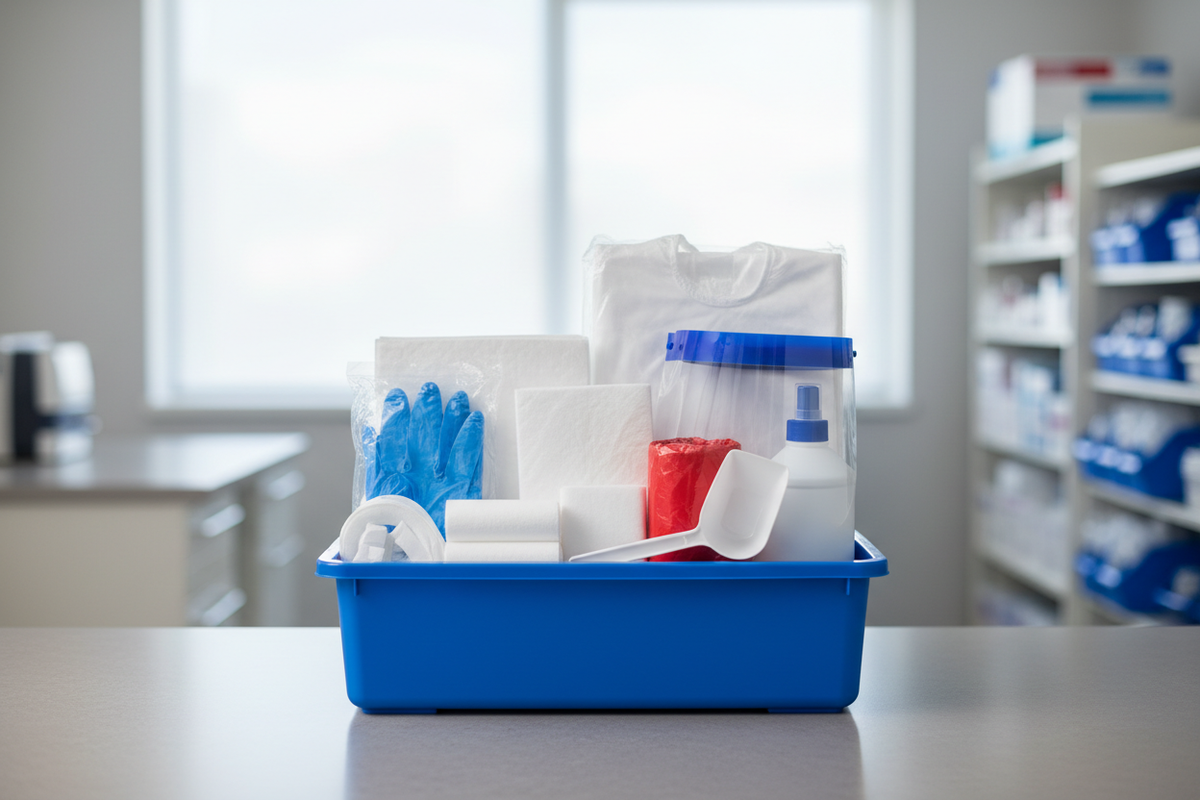
Biohazard Spill Cleanup: What Supplies Should Be Included in a Cleanup Kit?
Biohazard spills can happen in hospitals, physician offices, laboratories, dental practices, urgent care centers, nursing facilities, and other healthcare environments. When blood or other potentially infectious materials are spilled, having the right cleanup supplies immediately available can help staff respond according to the facility's established infection-control and safety procedures.
A well-stocked biohazard spill cleanup kit should provide more than absorbent material. Depending on the anticipated hazard, a complete kit may include protective gloves, gowns or aprons, eye and face protection, absorbent materials, disposable cleanup tools, waste-containment supplies, and appropriate disinfecting products.
The goal is simple: keep the supplies needed for an appropriate response together, clearly identified, and readily accessible.
What Is a Biohazard Spill Cleanup Kit?
A biohazard spill cleanup kit is a collection of supplies intended to help trained personnel manage spills involving blood or other potentially infectious materials. The exact contents should reflect the types of spills a facility expects, its written exposure-control plan, applicable regulations, and its infection-prevention procedures.
OSHA's Bloodborne Pathogens Standard requires employers to establish appropriate housekeeping and decontamination procedures when occupational exposure to blood or other potentially infectious materials is reasonably anticipated. Contaminated surfaces must be cleaned and decontaminated using appropriate procedures and disinfectants. OSHA's Bloodborne Pathogens Standard provides the applicable requirements.
For healthcare facilities, the best approach is to maintain dedicated cleanup kits in locations where spills are reasonably likely to occur rather than relying on staff to assemble supplies after an incident begins.
1. Disposable Gloves
Gloves are one of the most important components of a biohazard cleanup kit. OSHA requires appropriate gloves when hand contact with blood, other potentially infectious materials, or contaminated surfaces can reasonably be anticipated.
Nitrile gloves are a practical option for many facilities because they are available in multiple sizes and do not contain natural rubber latex. For routine hand protection, BSC Supply offers IMCO Brand Nitrile Exam Gloves.
Cleanup kits should contain enough gloves for the anticipated task, including replacement gloves if the first pair becomes contaminated, damaged, or otherwise unsuitable.
Include:
- Disposable nitrile or other task-appropriate gloves
- Multiple sizes where appropriate
- Extra pairs for replacement
2. Protective Gowns or Aprons
Gloves protect the hands, but larger spills can create a risk of contamination to clothing and exposed skin. Appropriate protective clothing should therefore be available when splash or contact with blood or potentially infectious materials is anticipated.
BSC Supply currently lists a Blood Borne Pathogen Protective Apparel Pack as well as a Blood Borne Pathogen Disposable Gown.
For higher-risk environments, facilities should select protective clothing based on the anticipated exposure and the specifications of the individual product.
Include:
- Disposable protective gowns or aprons
- Appropriate sizes
- Additional protection for larger or higher-risk spills
3. Eye and Face Protection
Splashes and sprays can create exposure risks to the eyes, nose, and mouth. OSHA identifies appropriate face and eye protection as part of PPE when splashes, sprays, spatters, or droplets of blood or other potentially infectious materials may pose a hazard.
Depending on the anticipated spill, a cleanup kit may include protective goggles, safety eyewear, or a face shield. BSC Supply offers eye and face protection that can be incorporated into a facility's broader PPE inventory.
Facilities should determine the appropriate level of face and eye protection through their exposure-control and infection-control procedures.
4. Absorbent Materials
Absorbent materials are essential for containing and collecting liquid spills. Depending on the kit, these may include absorbent pads, towels, cloths, or absorbent granules.
CDC guidance for blood and body-fluid spills recommends using appropriate absorbent material to confine and remove the visible spill before the surface is cleaned and disinfected. Contaminated absorbent materials should be handled and discarded according to the facility's procedures and applicable requirements.
A cleanup kit should therefore contain enough absorbent material for the size of spill the kit is intended to address.
Include:
- Absorbent towels, pads, or other appropriate materials
- Absorbent granules where appropriate
- Enough material for the anticipated spill volume
5. Disposable Cleanup Tools
Cleanup personnel may need tools that allow them to collect contaminated solid materials without direct hand contact. Disposable scoop and spatula combinations can be particularly useful for this purpose.
BSC Supply lists a Blood Borne Pathogen Scoop Spatula Combo, a disposable cleanup tool supplied in a 320-per-box configuration.
Including dedicated tools in a spill kit helps keep the response organized and reduces the need for staff to search for suitable equipment after a spill occurs.
6. Biohazard Waste and Disposal Supplies
Cleanup does not end when the visible spill has been removed. Used gloves, absorbent materials, disposable cleanup tools, and other contaminated items must be handled according to the facility's regulated-waste procedures.
Facilities should make sure their cleanup kits are compatible with the waste-containment systems used at the site and that staff understand where contaminated materials are supposed to go after a cleanup.
BSC Supply offers a range of sterilization and infection-control supplies, including biohazard waste bags and other products used for infection-control operations.
Consider including or keeping immediately accessible:
- Appropriate biohazard waste bags or containers
- Sharps containers where sharps may be encountered
- Labels or other required identification materials
- Facility-specific waste-handling supplies
Sharps require special attention. Needles, broken glass, and other contaminated objects capable of penetrating the skin should never be handled as ordinary spill debris.
7. Appropriate Disinfectant
Once visible contamination has been removed, the affected surface must be cleaned and appropriately disinfected according to the facility's procedures and the disinfectant manufacturer's label.
CDC guidance recommends appropriate PPE, removal of visible contamination, cleaning, and disinfection for blood and body-fluid spills. OSHA also specifies requirements for decontaminating contaminated work surfaces.
Do not select a disinfectant solely because it is marketed as a general-purpose cleaner. The facility should select an appropriate product based on the surface, organism or hazard, applicable label claims, required contact time, and facility protocol.
CDC also emphasizes following manufacturer instructions when preparing and using cleaning and disinfecting products. Never assume that using a higher concentration is safer or more effective.
8. A Prepackaged BBP Cleanup Kit Can Simplify Preparedness
For facilities that want a standardized response, a preassembled kit can make it easier to keep essential supplies together and ready for use.
BSC Supply currently offers a Blood Borne Pathogen Unitized Spill Clean Up Kit in a plastic case. BSC Supply also lists a BBP Unitized Spill Clean Up Kit with CPR in a plastic case.
These kits can be particularly useful for facilities that want a clearly identifiable response kit rather than assembling individual components each time supplies are ordered.
What Should Be in a Biohazard Spill Cleanup Kit?
| Supply | Purpose | Stocking Consideration |
|---|---|---|
| Disposable gloves | Protect hands from contamination | Multiple sizes and replacement pairs |
| Protective gown or apron | Protect clothing and exposed skin | Select based on anticipated exposure |
| Eye/face protection | Help protect against splashes and sprays | Goggles or face shield as appropriate |
| Absorbent materials | Contain and collect liquid contamination | Enough for expected spill volume |
| Disposable scoop/spatula | Collect contaminated solid materials | Useful for dedicated BBP kits |
| Waste-containment supplies | Contain contaminated cleanup materials | Follow facility waste procedures |
| Appropriate disinfectant | Decontaminate affected surfaces | Follow label and facility requirements |
| Instructions/procedure reference | Support consistent response | Match facility SOPs |
Don't Forget Training and Written Procedures
A cleanup kit is only one part of a biohazard spill response program. Staff who may encounter blood or other potentially infectious materials should understand their facility's exposure-control plan, PPE requirements, waste procedures, and reporting requirements.
OSHA's Bloodborne Pathogens Standard requires employers with occupational exposure to establish appropriate procedures and controls. The standard also addresses PPE, housekeeping, waste, training, and other aspects of occupational exposure prevention.
Facilities should keep cleanup kits in known, accessible locations and periodically verify that employees know where the kits are stored and how their organization's procedures apply.
Inspect and Restock Cleanup Kits Regularly
A biohazard spill kit is only useful if its contents are available when an incident occurs.
Healthcare facilities should establish a routine inspection schedule to verify that kits contain the required supplies and that products remain in usable condition. After a kit is used, it should be replenished promptly rather than returned to storage incomplete.
Consider checking:
- Glove sizes and quantities
- Gown and protective-apparel availability
- Absorbent material
- Disinfectant supply and expiration information
- Waste bags and containers
- Disposable cleanup tools
- Eye and face protection
- Printed instructions or facility SOP references
Shop Biohazard Spill Cleanup Supplies at BSC Supply
When a blood or body-fluid spill occurs, staff should not have to search multiple supply rooms for basic cleanup equipment.
BSC Supply offers dedicated bloodborne-pathogen cleanup products and supporting PPE and infection-control supplies. For facilities looking for an all-in-one option, start with the BBP Unitized Spill Clean Up Kit. You can also add BBP Protective Apparel Packs, disposable BBP gowns, BBP shoe covers, and disposable BBP scoop/spatula tools to build a response inventory around your facility's needs.
Prepare before the spill happens. Keep your biohazard cleanup supplies together, accessible, and ready for use.
Shop Infection Control Supplies at BSC Supply →
Frequently Asked Questions
What should be included in a biohazard spill cleanup kit?
A typical kit may include disposable gloves, protective clothing, eye or face protection, absorbent materials, disposable cleanup tools, waste-containment supplies, and an appropriate disinfectant. The exact contents should be based on the facility's exposure-control plan and applicable procedures.
What PPE is needed for blood spill cleanup?
The required PPE depends on the anticipated exposure. OSHA and CDC guidance identify appropriate gloves and additional protection such as gowns, eye protection, and face protection when splash or other exposure hazards are present. Facilities should follow their written procedures and exposure-control plan.
What disinfectant should be used for a blood spill?
Facilities should use an appropriate disinfectant that is compatible with the surface and labeled for the intended use, following the manufacturer's instructions and facility infection-control procedures. OSHA and CDC provide guidance on appropriate disinfection of surfaces contaminated with blood or body fluids.
How should contaminated cleanup materials be disposed of?
Contaminated cleanup materials should be handled and disposed of according to the facility's regulated-waste procedures and applicable federal, state, and local requirements. Sharps and other objects capable of penetrating the skin require appropriate sharps-containment procedures.
Are prepackaged biohazard spill kits worth stocking?
Prepackaged kits can simplify preparedness by keeping commonly needed response supplies together in a clearly identifiable package. BSC Supply offers BBP unitized spill cleanup kits in plastic cases, including a version with CPR supplies.
How often should a biohazard spill kit be checked?
Facilities should establish a routine inspection schedule based on their policies, usage, storage conditions, and risk profile. Kits should also be inspected and promptly restocked after every use.