
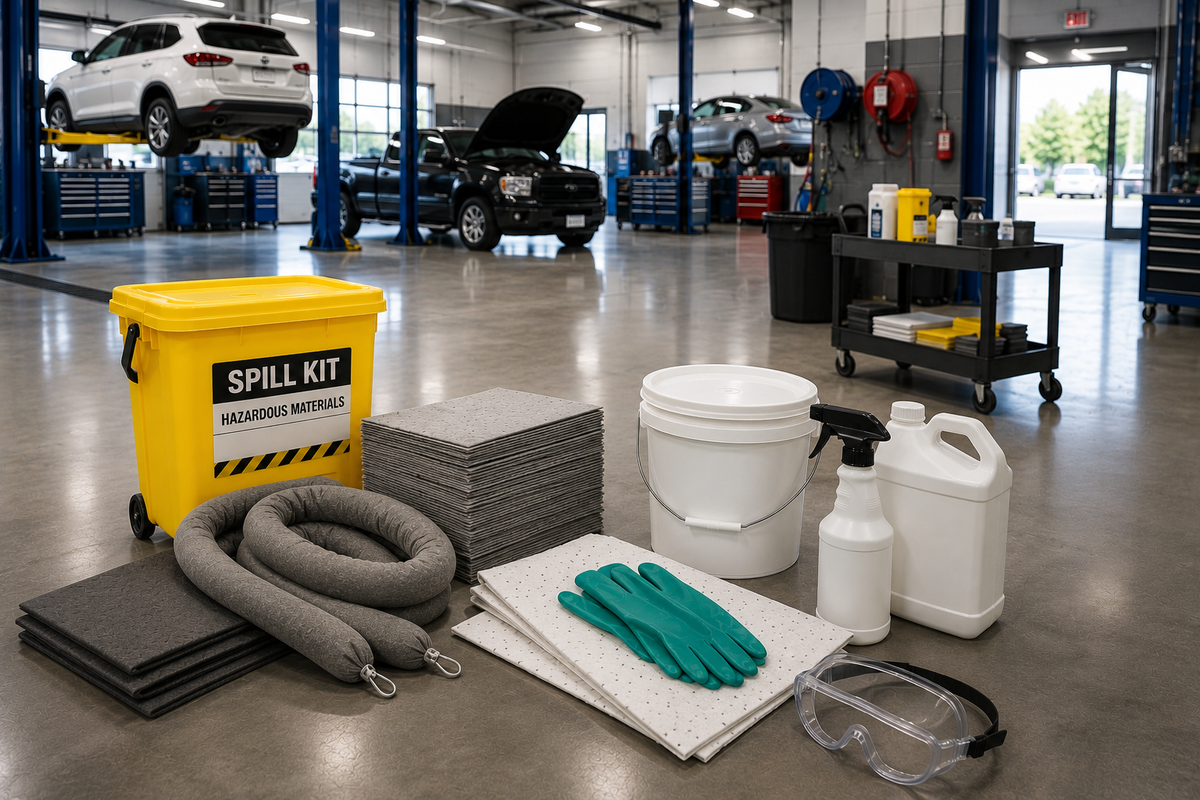
Automotive Shop Spill Cleanup: Essential Supplies to Keep on Hand
Spills are an unavoidable part of many automotive repair and maintenance operations. Motor oil, transmission fluid, coolant, brake fluid, fuel, hydraulic fluid, degreasers, and other shop chemicals can end up on floors, workbenches, equipment, or storage areas during routine service.
The key is being prepared to deal with those spills quickly and safely.
A well-stocked automotive shop spill cleanup kit gives technicians and maintenance personnel immediate access to absorbents, containment products, PPE, cleaning supplies, and waste-management materials. Having these supplies readily available can help prevent a small leak from spreading across a work area, creating a slip hazard, reaching a floor drain, or becoming a larger cleanup problem.
EPA guidance for businesses handling used oil recommends having sorbent materials available, stopping the source of a spill, containing spilled oil, recovering the material, and properly managing used cleanup materials.
Why Every Automotive Shop Needs Spill Cleanup Supplies
Automotive facilities work with liquids that can create multiple hazards when spilled. Even a relatively small amount of oil or coolant can make a shop floor slippery and create a fall hazard.
Some automotive fluids can also create environmental concerns if they enter storm drains, soil, or waterways. EPA recommends preventing spills where possible and cleaning up spills promptly when they occur.
Spill supplies should therefore be treated as part of an automotive shop's everyday safety and housekeeping program—not as something to purchase only after a major incident.
A good spill-response inventory should allow employees to:
- Stop or isolate the source when it is safe to do so
- Contain the spilled liquid
- Absorb or recover the material
- Clean the affected surface
- Prevent the spill from spreading
- Protect themselves with appropriate PPE
- Collect and manage contaminated cleanup materials properly
1. Oil-Only Absorbent Pads and Socks
Oil-only absorbents are among the most useful supplies for automotive repair shops because they are designed for petroleum-based liquids and other oil-based fluids while generally repelling water.
Absorbent pads can be used beneath vehicles, around leaking equipment, on shop floors, and during fluid-transfer operations. Absorbent socks can be positioned around the perimeter of a spill to help prevent it from spreading.
BSC Supply offers an automotive-relevant selection of spill-control and absorbent products, including Oil Only White Super Absorbent Flake Socks. The BSC Supply catalog currently lists oil-only absorbent products within its Spill Control & Absorbents category.
Keep on hand:
- Oil-only absorbent pads
- Oil-only absorbent socks
- Absorbent pillows for larger localized spills
- Absorbent rolls for longer work areas
- Extra absorbent material for high-use service bays
EPA explains that oil-spill sorbents should be oil-attracting and water-repellent when used for oil recovery.
2. General-Purpose Absorbents
Not every shop spill involves petroleum oil. Automotive facilities may also encounter coolant, water-based fluids, cleaning solutions, and other liquids.
For these situations, a general-purpose absorbent can provide useful flexibility. Facilities should choose absorbents based on the liquids they routinely handle rather than assuming one type of sorbent is appropriate for every spill.
Potential supplies include:
- General-purpose absorbent pads
- Absorbent rolls
- Absorbent socks
- Absorbent pillows
- Granular absorbent materials where appropriate
Keeping both oil-only and general-purpose absorbents available can help technicians select the appropriate material without delaying the initial response.
3. Spill Kits
A preassembled spill kit can make emergency response significantly easier because multiple cleanup supplies are stored together and ready to deploy.
Automotive facilities should consider placing spill kits in locations where spills are most likely to occur, such as service bays, fluid-storage areas, parts-cleaning areas, and near waste-oil collection points.
A useful automotive spill kit may include:
- Absorbent pads
- Absorbent socks
- Absorbent bags or disposal bags
- Protective gloves
- Safety goggles
- Cleanup bags
- Instructional materials
Facilities with different spill hazards may benefit from maintaining more than one type of kit—for example, oil-only kits for service bays and general-purpose kits for maintenance areas.
Shop Spill Control & Absorbent Supplies at BSC Supply →
4. Containment Socks and Berms
Absorbent pads are useful for soaking up liquid, but they do not always prevent a spill from spreading. Containment socks and berm-style absorbents can create a perimeter around a spill and help keep the liquid in a defined area.
This is particularly useful when a spill is spreading across a smooth shop floor.
EPA recommends containing spilled oil—for example, by using sorbent berms or spreading sorbent over the oil—before completing the cleanup.
Consider keeping:
- Oil-only absorbent socks
- General-purpose absorbent socks
- Reusable containment materials where appropriate
- Additional perimeter absorbents for larger work areas
5. Shop Towels and Cleaning Wipers
Not every automotive cleanup requires a full spill kit. Small drips, equipment residue, and minor fluid-transfer messes can often be addressed with appropriate shop towels or cleaning wipers.
Shop towels can also be useful after the majority of a spill has been absorbed, allowing technicians to remove remaining residue from tools, equipment, work surfaces, and floors.
Facilities should maintain a sufficient supply of disposable or reusable wipers appropriate for their operations.
Useful applications include:
- Wiping residual oil from equipment
- Cleaning around fluid-fill points
- Removing grease and grime
- Wiping tools and work surfaces
- Final cleanup after absorbent materials are removed
Used towels and rags should be managed according to the facility's waste procedures and the characteristics of the materials they contain.
6. Nitrile Gloves and Other PPE
Spill cleanup should not begin without considering the hazards of the spilled material and the PPE appropriate for the task.
Automotive technicians may encounter used motor oil, solvents, degreasers, coolants, fuels, and other substances. The correct PPE depends on the material, concentration, route of exposure, and task.
BSC Supply offers a broad selection of gloves, including BLUZEN Disposable Nitrile Gloves. These gloves are powder-free and designed to provide protection while maintaining comfort and dexterity.
Potential spill-response PPE includes:
- Nitrile gloves
- Chemical-resistant gloves appropriate for the material
- Safety goggles
- Face protection where splash hazards exist
- Protective clothing or aprons
- Slip-resistant footwear
For hazardous chemical cleanup, PPE should be selected based on the applicable Safety Data Sheet (SDS), hazard assessment, and facility procedures.
7. Safety Goggles and Eye Protection
Automotive fluids can splash during leaks, transfers, or cleanup. Eye protection should be readily available wherever workers may be exposed to splashes or hazardous substances.
For chemical products, employees should consult the relevant SDS and workplace procedures to determine the appropriate eye and face protection.
Keeping goggles or other appropriate eye protection near spill kits makes it easier for workers to select PPE before beginning cleanup.
8. Degreasers and Floor Cleaners
Absorbents remove much of the liquid, but oily residue may remain on the floor afterward. A suitable cleaner or degreaser can help remove the remaining film and restore the surface.
BSC Supply's Jan/San collection includes a variety of cleaning products and specialty cleaners. For example, facilities can review the Zep Heavy-Duty Citrus Degreaser Concentrate for appropriate shop-cleaning applications.
Consider stocking:
- Heavy-duty degreasers
- Neutral floor cleaners for appropriate surfaces
- General-purpose cleaners
- Cleaning brushes
- Squeegees
- Mops appropriate for shop floors
Always follow the manufacturer's instructions regarding dilution, surface compatibility, ventilation, PPE, and use.
9. Floor Sweep and Granular Absorbents
Some automotive facilities use granular absorbents or floor-sweep products for certain types of spills. These products can be useful when a spill covers a broad floor area or when a shop needs an absorbent material that can be distributed over a surface.
EPA's automotive pollution-prevention guidance discusses the use of absorbent materials and recommends keeping appropriate absorbents available to prevent spills from spreading.
Facilities should select the absorbent appropriate for the specific liquid and follow local disposal requirements for used material.
Granular products should not automatically replace oil-only pads and socks. Different spill materials call for different response methods.
10. Drip Pans and Preventive Spill-Control Supplies
The best spill cleanup is the spill that never reaches the floor.
Automotive facilities can reduce cleanup requirements by using drip pans, drain pans, funnels, fluid-transfer equipment, and other containment products during maintenance operations.
EPA recommends using equipment such as drain pans when removing vehicle fluids and emphasizes preventing spills and leaks as part of good automotive-shop housekeeping.
Consider keeping readily available:
- Oil drain pans
- Drip pans
- Fluid-transfer containers
- Funnels
- Absorbent mats for recurring leak points
- Secondary containment for appropriate storage areas
Preventive containment can reduce the volume of material that reaches the floor and minimize the amount of contaminated absorbent waste generated.
11. Waste Bags and Containers
Once a spill has been absorbed, the cleanup materials still need to go somewhere.
Automotive facilities should establish procedures for collecting, labeling, storing, recycling, or disposing of contaminated absorbents and other cleanup materials.
EPA notes that used cleanup materials containing free-flowing used oil need to be managed according to applicable used-oil management requirements.
Keep appropriate waste supplies available:
- Heavy-duty cleanup bags
- Trash bags and liners
- Dedicated containers for contaminated absorbents
- Used-oil collection containers
- Labels for waste containers
- Appropriate secondary containment
Do not assume that oil-contaminated absorbents can automatically be discarded as ordinary trash. Waste classification and disposal requirements can depend on the material, contamination, and applicable federal, state, and local rules.
12. Wet-Floor and Spill Warning Signs
Spill response is also about protecting everyone who enters the work area.
A freshly spilled automotive fluid can create a serious slip hazard, especially on smooth concrete or coated shop floors. While cleanup is underway, appropriate warning signs or barriers can help keep employees and customers away from the affected area.
Consider keeping:
- Wet-floor signs
- Caution signs
- Safety cones
- Temporary barriers
- Area-closure signage
The specific controls should be appropriate to the size and location of the spill and the facility's safety procedures.
13. SDS and Chemical Information
A spill-response program should include more than physical cleanup supplies. Employees need access to information about the chemicals and fluids they may encounter.
OSHA emphasizes that Safety Data Sheets should be readily accessible to workers for hazardous chemicals, including engine oils, lubricants, fuels, cleaning products, and other chemicals used during spill response. OSHA also emphasizes worker training, appropriate PPE, chemical labeling, and safe cleaning practices.
Automotive facilities should make sure workers know:
- Where SDS documents are located
- How to identify spilled materials
- Which PPE is required
- Which absorbent is appropriate
- How contaminated materials should be handled
- When a spill is beyond their training or authority to clean
14. When an Automotive Spill Is More Than an Incidental Spill
Not every spill should be handled by simply grabbing an absorbent pad.
OSHA distinguishes incidental releases that employees in the immediate area can safely absorb, neutralize, or otherwise control from releases that create hazards requiring a more formal emergency response.
If a spill involves a significant fire, explosion, toxic exposure, uncontrolled release, unknown substance, or other serious hazard, employees should follow the facility's emergency-response procedures rather than attempting an improvised cleanup.
Facilities should establish clear criteria for when employees should:
- Stop work
- Isolate the area
- Notify a supervisor
- Evacuate
- Contact emergency responders
- Use a designated hazardous-material response team
Employees should only perform spill-control activities they are trained and authorized to perform.
Automotive Shop Spill Cleanup Checklist
| Category | Examples | Why It Matters |
|---|---|---|
| Oil absorbents | Oil-only pads, socks, rolls, pillows | Absorb petroleum-based spills and help contain spreading liquid |
| General absorbents | Universal pads, socks, granular absorbents | Useful for non-oil liquids and varied shop spills |
| Spill kits | Preassembled absorbent and PPE kits | Keeps response supplies together and accessible |
| Shop towels | Disposable or reusable wipers | Handles minor drips and final cleanup |
| PPE | Nitrile gloves, chemical-resistant gloves, goggles | Protects workers during cleanup |
| Containment | Drip pans, berms, socks | Helps stop liquids from spreading |
| Cleaners | Degreasers, floor cleaners, brushes | Removes residue after absorption |
| Waste supplies | Bags, containers, labels | Supports proper handling of contaminated materials |
| Warning equipment | Wet-floor signs, cones, barriers | Helps protect workers and visitors from slip hazards |
| SDS information | Safety Data Sheets and chemical information | Supports safe material-specific response |
How to Organize an Automotive Shop Spill Station
A spill station is most effective when employees can find it immediately.
Instead of storing all spill-response products in a distant supply room, consider placing clearly identified spill stations near areas where spills are most likely to occur.
A typical service-bay spill station might contain:
- Oil-only absorbent pads
- Oil-only socks
- General-purpose absorbents
- Nitrile gloves
- Safety goggles
- Cleanup bags
- Shop towels
- Warning signage
Larger facilities may benefit from centralized bulk inventory plus smaller response kits positioned throughout the shop.
How Often Should Automotive Spill Supplies Be Checked?
Spill supplies should be inspected regularly rather than only after a spill occurs.
High-use automotive facilities can consume absorbent pads, gloves, towels, and cleanup bags quickly. A routine inventory check helps ensure the shop does not discover an empty spill station when a leak occurs.
Check for:
- Missing absorbent pads
- Low quantities of absorbent socks
- Missing PPE
- Damaged spill kits
- Empty or leaking chemical containers
- Insufficient cleanup bags
- Missing warning signs
- Expired or compromised products where applicable
- Unlabeled waste containers
After a spill, replenish the response station immediately so it is ready for the next incident.
Reduce Automotive Shop Spill Risk Before a Spill Happens
Spill cleanup is only one part of a good automotive housekeeping program.
Facilities can also reduce spill frequency by inspecting fluid-storage areas, maintaining equipment, checking hoses and fittings, using drip pans during service, keeping containers closed, and addressing leaks promptly.
EPA recommends maintaining equipment and containers in good working condition and taking care during used-oil transfers to prevent leaks and spills.
These preventive measures can reduce cleanup costs, protect employees, and minimize the amount of contaminated waste generated.
Shop Automotive Spill Cleanup Supplies at BSC Supply
When an automotive fluid hits the floor, having the right supplies nearby can make the difference between a quick cleanup and a much larger problem.
BSC Supply offers products across Spill Control & Absorbents, cleaning supplies, PPE, gloves, floor-care products, waste supplies, and other products used by automotive service operations. BSC Supply also maintains a dedicated Automotive collection designed for automotive departments and service operations.
For everyday hand protection, review the BLUZEN Disposable Nitrile Gloves. For spill containment, explore BSC Supply's Spill Control & Absorbents selection, including oil-only absorbent products. For post-spill cleanup, review the Zep Heavy-Duty Citrus Degreaser Concentrate.
Keep your service bays ready for leaks, drips, and spills before they happen.
Shop Automotive Supplies at BSC Supply →
Frequently Asked Questions
What should be included in an automotive shop spill cleanup kit?
A basic automotive spill kit may include oil-only absorbent pads, socks, or rolls; general-purpose absorbents; gloves; eye protection; cleanup bags; and other containment supplies. The exact contents should reflect the fluids and chemicals used at the facility.
What is the best absorbent for an automotive oil spill?
Oil-only absorbents are designed specifically for petroleum-based liquids and are commonly used for automotive oil spills. Facilities should select absorbents based on the type of liquid involved and follow their spill-response procedures.
Should automotive shops keep oil-only absorbent socks?
Yes. Oil-only absorbent socks can be useful for creating a containment perimeter around an oil spill and helping prevent the liquid from spreading across the shop floor.
What PPE should be used when cleaning an automotive spill?
PPE depends on the material being cleaned and the potential exposure. Nitrile or chemical-resistant gloves, eye protection, protective clothing, and other PPE may be appropriate depending on the fluid and the task. Workers should consult the applicable SDS and facility procedures.
How should oil-soaked absorbents be disposed of?
Used absorbents containing free-flowing used oil need to be managed according to applicable used-oil and waste-management requirements. Facilities should determine the appropriate handling and disposal method based on the material and applicable federal, state, and local requirements.
Can employees clean up every automotive shop spill?
No. Employees should only handle spills that fall within their training, equipment, and facility procedures. OSHA distinguishes incidental releases that can be safely controlled by employees in the immediate area from releases requiring a more formal emergency response.
How can an automotive shop prevent spills?
Facilities can reduce spills by maintaining equipment and containers, using drip pans during fluid changes, using appropriate transfer equipment, keeping containers closed, inspecting for leaks, and cleaning small leaks before they become larger problems.