
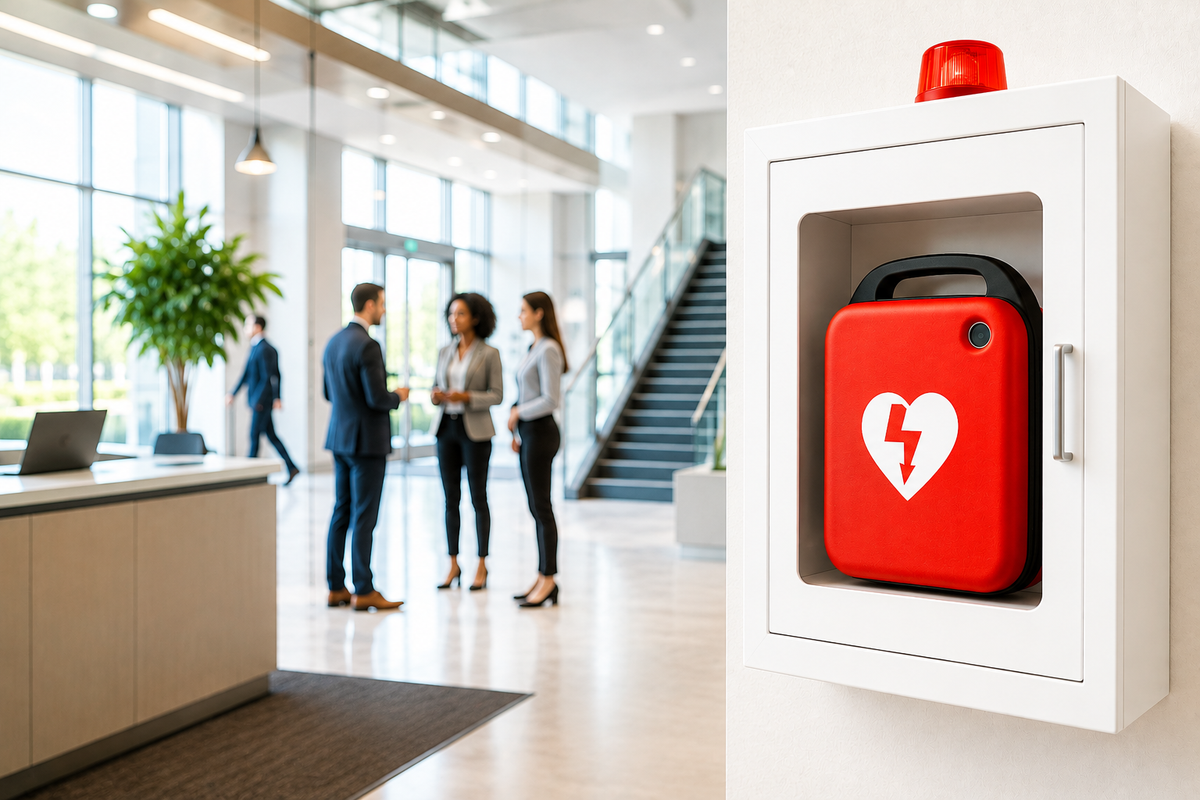
An automated external defibrillator (AED) is an important part of an organization's emergency preparedness program. However, purchasing an AED is only the first step. Businesses, schools, healthcare facilities, and other organizations also need to determine how many AEDs they need, where to place them, and how to maintain the equipment over time.
At BSC Supply, we help organizations source medical and emergency care products, including medical supplies and workplace safety products. This guide covers the basics of choosing the right number of AEDs for your organization, replacing AED pads and batteries, and creating a maintenance plan that helps keep your AED equipment ready for use.
How Many AEDs Does Your Business Need?
There is no universal answer to the question, "How many AEDs should a business have?" The right number depends on your organization's facility size, building layout, population, and accessibility requirements.
A small office may be adequately served by one centrally located AED, while a large school, medical facility, automotive dealership, warehouse, or multi-floor building may require several units.
When determining how many AEDs your organization should purchase, consider:
- The size of your building or campus
- The number of floors in your facility
- The number of employees, customers, students, patients, or visitors on-site
- Large gathering areas such as cafeterias, gyms, waiting rooms, and auditoriums
- Remote departments, warehouses, service areas, or outdoor locations
- How quickly an AED can be retrieved during an emergency
The most important consideration is accessibility. An AED should be available quickly without requiring someone to travel through multiple floors, long hallways, locked areas, or other obstacles.
For organizations purchasing their first AED or expanding an existing emergency response program, BSC Supply offers professional AED options, including the ZOLL AED Plus Package with Pads, Batteries and Carry Case.
Where Should You Place an AED?
Buying the right number of AEDs is important, but placement is equally important. An AED should be easy to locate and quickly accessible during an emergency.
Common AED locations include:
- Main entrances and reception areas
- Central hallways
- Break rooms and cafeterias
- Gyms and fitness areas
- Auditoriums and large gathering spaces
- Service departments and workshops
- Warehouses and production areas
- Medical or first aid rooms
Organizations should avoid storing AEDs in offices or other locations that may be locked or difficult to access. Clear signage can also help employees and visitors locate an AED quickly.
For facilities that require additional emergency response equipment, the ZOLL AED Plus Public Safety Package is another option available through BSC Supply.
How Often Should AED Pads Be Replaced?
AED pads are among the most important replacement components in your AED program.
AED electrode pads are designed for one-time use. After an AED is used during an emergency, the pads should be replaced immediately.
Even unused AED pads have expiration dates. Over time, the conductive material on the pads can degrade, which is why organizations should regularly check expiration dates as part of their AED maintenance schedule.
Best practices for AED pad replacement include:
- Check AED pad expiration dates regularly.
- Replace pads before their expiration date.
- Replace pads immediately after they are used.
- Keep AED pads sealed in their original packaging until needed.
- Inspect pads for damage or compromised packaging.
- Keep replacement pads available so the AED can be returned to service after use.
Organizations that serve children should also evaluate their pediatric emergency response requirements. Depending on the AED and the environment, pediatric-compatible equipment may be appropriate. BSC Supply also carries specialized products such as pediatric defibrillation electrode pads with a ZOLL connector.
When purchasing AED replacement pads, always confirm compatibility with your specific AED model.
When Should AED Batteries Be Replaced?
AED batteries require routine monitoring and replacement. Battery life varies by manufacturer and AED model, so organizations should follow the manufacturer's recommended replacement schedule.
An AED should never be assumed ready simply because it has not been used. Regular inspections should include checking the AED's readiness indicator and reviewing battery expiration information.
Your AED battery maintenance plan should include:
- Checking the AED's readiness indicator.
- Recording battery expiration or replacement dates.
- Replacing batteries according to manufacturer recommendations.
- Replacing batteries when required after device use.
- Keeping replacement batteries available when appropriate.
Some AED packages include the essential components needed to put a new device into service. For example, the ZOLL AED Plus Package available from BSC Supply includes AED pads, batteries, and a carry case.
How Often Should You Inspect an AED?
A routine AED inspection schedule can help identify expired or missing components before an emergency occurs.
Many organizations assign AED inspections to a safety manager, facilities manager, medical staff member, or other designated employee. The person responsible should know where every AED is located and maintain records for inspections and replacement dates.
During a regular AED inspection, check:
- The AED's status or readiness indicator.
- AED battery expiration information.
- AED pad expiration dates.
- The condition of the device and carrying case.
- Whether required pads and accessories are available.
- Whether replacement supplies are stocked.
- Whether the AED is visible and accessible.
- Whether AED signage is still clearly visible.
Maintaining a written or digital inspection log can make it easier to track upcoming replacement dates and plan purchases before pads or batteries expire.
What AED Supplies Should Your Organization Keep on Hand?
An AED program should include more than the device itself. Keeping the right emergency response supplies available can help your organization restore the AED to service and support a faster response.
Depending on your facility and AED model, consider maintaining:
- Replacement AED pads.
- Replacement AED batteries.
- Disposable medical gloves.
- Scissors.
- A CPR mask or barrier device.
- A razor.
- A towel or other appropriate item for drying the patient's chest.
BSC Supply provides a broad range of medical supplies, making it easier for businesses and facilities to source AED equipment alongside other workplace safety and emergency care products.
Best Practices for Managing AEDs in Your Organization
The best AED program is one that is easy to maintain. Establishing a clear process helps ensure that important tasks do not depend on someone remembering an expiration date months or years in the future.
1. Assign Ownership
Designate a specific employee or team to manage AED inspections, replacement supplies, and maintenance records.
2. Track Expiration Dates
Create a schedule for monitoring AED pads and batteries. Set reminders well before components reach their expiration dates.
3. Keep Replacement Supplies Available
Do not wait until after an emergency to order replacement components. Keeping compatible replacement supplies available can help minimize downtime.
4. Review AED Locations Regularly
As your business grows, expands into new buildings, or changes its facility layout, review whether your current AED locations still provide adequate coverage.
5. Train Employees
Employees should know where AEDs are located and understand your organization's emergency response procedures. CPR and AED training can help designated responders feel more prepared during an emergency.
6. Check for Manufacturer Updates
Keep your AED registered with the manufacturer when applicable and monitor important product notices, maintenance recommendations, and recalls.
Choosing the Right AED for Your Business, School, or Facility
When purchasing an AED, it is important to consider more than the initial price of the device. Organizations should also evaluate long-term replacement needs, including pads, batteries, accessories, and maintenance requirements.
Questions to consider include:
- Is the AED appropriate for the people and environment it will serve?
- What replacement pads and batteries will be required?
- How often do those components need to be replaced?
- Are replacement parts readily available?
- Does the AED include accessories needed for your organization?
- Will you need additional units to provide coverage throughout the facility?
BSC Supply offers AED options for organizations looking to add emergency response equipment to their workplace, school, or healthcare facility. The ZOLL AED Plus Package with Pads, Batteries and Carry Case is designed as a complete AED package, while the ZOLL AED Plus Public Safety Package offers another option for organizations evaluating professional AED equipment.
Keep Your AED Program Ready with BSC Supply
An AED can be an important investment in your organization's emergency preparedness, but keeping the device ready requires ongoing attention. Regular inspections, timely replacement of AED pads and batteries, accessible placement, and a reliable supply of replacement products can all help your organization maintain a more effective AED program.
Whether you are purchasing your first AED, adding units to a growing facility, or reviewing your existing emergency equipment, BSC Supply can help you source the products your organization needs.
Shop BSC Supply's medical products to explore our selection of healthcare, emergency care, and facility supplies, or view the ZOLL AED Plus Package to learn more about adding an AED to your organization's emergency preparedness program.
Frequently Asked Questions About AEDs for Businesses
How many AEDs should a business have?
The number of AEDs a business needs depends on the size and layout of the facility, the number of employees and visitors, and how quickly an AED can be retrieved during an emergency. Larger buildings, multi-floor facilities, schools, warehouses, and campuses may require multiple AEDs to provide adequate coverage.
How often should AED pads be replaced?
AED pads should be replaced immediately after they are used and before their manufacturer-designated expiration date. Organizations should regularly inspect AED pads to ensure they are sealed, undamaged, and within their expiration period.
How often should AED batteries be replaced?
AED battery replacement schedules vary by manufacturer and model. Businesses should follow the manufacturer's recommended replacement schedule and regularly check the AED's readiness indicator and battery expiration date.
How often should an AED be inspected?
AEDs should be checked regularly as part of an organization's safety and emergency preparedness program. A routine inspection should include checking the device's readiness indicator, AED pad expiration dates, battery status, accessories, and the overall condition of the unit.
Where should an AED be located in a business?
AEDs should be placed in visible, accessible locations where they can be reached quickly during an emergency. Common locations include main hallways, reception areas, cafeterias, gyms, break rooms, warehouses, service departments, and other high-traffic areas.
What AED replacement supplies should businesses keep on hand?
Businesses should consider keeping compatible replacement AED pads and batteries available, along with emergency response supplies such as disposable gloves, scissors, a CPR barrier mask, and other accessories appropriate for their facility and AED model.
Can businesses purchase AEDs and replacement supplies from BSC Supply?
Yes. BSC Supply provides AEDs, medical supplies, and emergency preparedness products for businesses, schools, medical facilities, and other organizations. Visit BSC Supply's medical products to explore available products and supplies.